

Yudo history
Origin
Yudo Auto (Yundu in Chinese) was founded in 2015 in Putian, Fujian province, during the first wave of Chinese electric-vehicle start-ups. It was one of the early start-ups to receive a licence from the Chinese government to produce new-energy passenger vehicles, a permission that was hard to obtain at the time. Yudo's founders aimed to build affordable electric SUVs for cities in southern China.
Ownership
Yudo is a private company with investment from Fujian-based groups and local government funds in Putian. It has a production base in Putian with a planned capacity of tens of thousands of vehicles per year. Over the years the company has looked for strategic partners to strengthen its finances.
Key milestones
- 2015: Yudo Auto is founded in Putian, Fujian.
- Late 2010s: Yudo receives a licence to build electric passenger vehicles.
- 2017: the π1 and π3 electric SUVs are launched.
- 2020s: Yudo updates the π1 and introduces the Yuntu small electric SUV.
Products
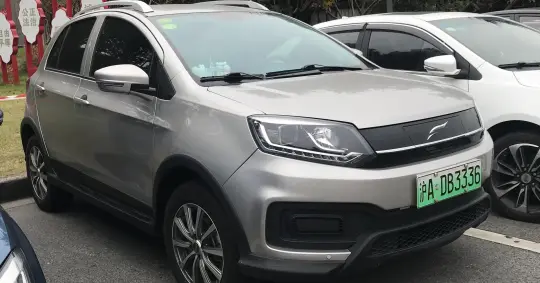
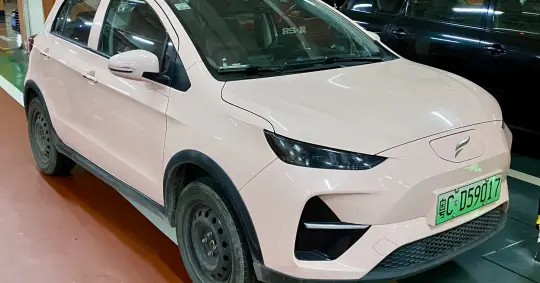
The Yudo π1 is a small electric SUV designed for city driving, with a short length, high seating position and modest battery size to keep the price low. The Yuntu is another compact electric SUV aimed at young buyers and families who need an affordable second car. Both models focus on low running costs rather than high performance.
Market position
Yudo competes in the crowded market for small electric cars, where giants such as BYD, Wuling and Chery set low prices. With a small sales network concentrated in Fujian and southern China, Yudo is one of the many smaller makers trying to survive by focusing on regional markets and fleet customers.
Yudo today
Yudo remains a niche brand. Its story shows both the opportunities and the difficulties of China's early electric-car start-ups: it gained a valuable licence early but has struggled to grow against much larger competitors.
Engineering
Yudo designs and builds small electric SUVs and city cars at its base in Putian, Fujian. Its cars use lithium-ion batteries from Chinese suppliers and front-mounted electric motors. The π1 is a small electric crossover for city use and the Yuntu a newer compact model, both offering simple, affordable electric transport with modern connectivity features.
Market position
Yudo is a regional player that depends on the Fujian market and on fleet and ride-hailing customers. It competes with much larger brands such as BYD, Wuling and Chery, and with the many other small electric start-ups that appeared in China in the late 2010s. Many of these companies have since disappeared, and Yudo's survival reflects its support from local government and investors.
Outlook
As China's electric-car market consolidates, small brands like Yudo face strong pressure. Its focus on low-cost, practical cars for local buyers and fleets remains its main strength.
Model names
Yudo uses the Greek letter π in the names of several models, such as the π1 and π3. In some export markets, Yudo cars have been sold with simplified numeric names.
Current line-up in China
Key figures for the current model year, taken from manufacturer specification data (Autohome configuration sheets). Prices are Chinese retail prices (MSRP) converted at 1 USD = 6.7075 CNY (PBOC central parity, 27 November 2026).
- Yudo Yuntu – small SUV; battery electric; 4,035 mm long with a 2,480 mm wheelbase; up to 70 kW; CLTC range 320–415 km; 5 seats; priced at CN¥69,800–93,800 (about US$10,406–13,984); battery 31.95–41.7 kWh; FWD; top speed up to 130 km/h; kerb weight 1,230–1,310 kg.
- Yudo π1 – small SUV; battery electric; 4,010 mm long with a 2,460 mm wheelbase; up to 55 kW; CLTC range 351 km; 5 seats; priced at CN¥79,800 (about US$11,897); battery 41.7 kWh; FWD; top speed up to 105 km/h; kerb weight 1,380 kg.
Official website: yudoauto.com