
Rising history
Origin
Rising began as the R brand within Roewe. In 2020 SAIC presented "R" as a high-end new-energy line of Roewe, with the Marvel R electric SUV and the ER6 sedan. In 2021 SAIC turned it into an independent brand called Rising Auto (Feifan, meaning "extraordinary"). The new brand was meant to compete with Tesla, NIO and XPeng, using SAIC's latest electric platforms, batteries and smart-car technology. Rising later also shared technology with IM Motors, SAIC's other premium electric brand.
Ownership
Rising Auto is wholly owned by SAIC Motor, the Shanghai state-owned group that also controls Roewe, MG, IM Motors, Maxus and joint ventures with Volkswagen and General Motors. In 2025 SAIC reorganised its brands and moved Rising back under Roewe's management to concentrate resources, while the Rising models remained on sale.
Key milestones
- 2020: Roewe presents its "R" premium line and the Marvel R electric SUV.
- 2021: Rising Auto (Feifan) is launched as a separate brand.
- 2022: the Rising R7 electric SUV goes on sale with lidar-equipped driver assistance as an option.
- 2023: the Rising F7 electric sedan is launched.
- 2024: Rising adds updated versions and works with Chinese tech partners on its smart cockpit.
- 2025: SAIC merges Rising's operations into Roewe.
Products and technology
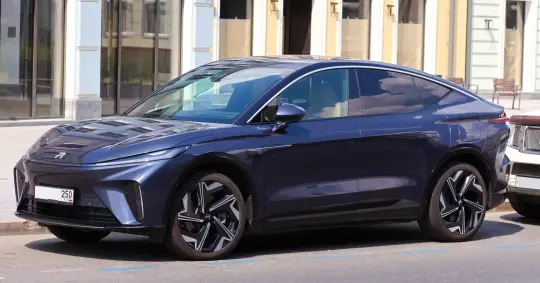
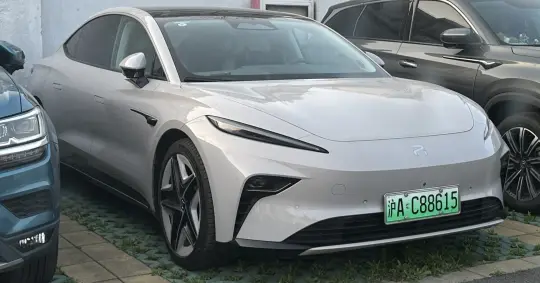
The R7 is a large electric SUV coupe built on SAIC's dedicated electric architecture. It was among the first Chinese cars to offer a lidar-based driver-assistance package. The F7 is a large electric sedan with a sleek fastback shape and a cabin dominated by large screens. Both cars use batteries from SAIC's battery operations and partners.
Positioning
Rising was positioned above Roewe and below IM Motors, offering premium technology at more accessible prices. However, competition in the Chinese premium EV market was intense, and Rising's sales remained modest, which led SAIC to fold the brand back into Roewe.
Rising today
The R7 and F7 remain on sale and are listed here under the Rising name. They show SAIC's electric technology and are good examples of the many premium electric brands launched by Chinese state-owned groups in the early 2020s.
Lessons from Rising
Rising's story reflects the difficulty of building a new premium brand in China. SAIC invested heavily in technology, including lidar and high-capacity batteries, but buyers had many choices among start-ups and established brands. The decision to merge Rising into Roewe shows how Chinese carmakers are now consolidating brands to reduce costs and focus on their strongest names.
Name
The Chinese name Feifan means "extraordinary", and the English name Rising was chosen to suggest progress and ambition. The brand used a stylised R as its emblem, inherited from Roewe's R line.
Who buys a Rising
Rising's buyers were mainly young, technology-minded customers in large Chinese cities who compared its cars with the Tesla Model Y, the XPeng G6 and the NIO ES6, and who valued long range, fast charging and advanced driver assistance.
Current line-up in China
Key figures for the current model year, taken from manufacturer specification data (Autohome configuration sheets). Prices are Chinese retail prices (MSRP) converted at 1 USD = 6.7075 CNY (PBOC central parity, 27 November 2026).
- Rising F7 – large sedan; battery electric; 5,000 mm long with a 3,000 mm wheelbase; up to 150 kW; 0–100 km/h in 8.1 s; CLTC range 520 km; 5 seats; priced at CN¥182,900 (about US$27,268); battery 62.2 kWh; RWD; top speed up to 200 km/h; kerb weight 2,070 kg; driver assistance: RISING PILOT.
- Rising R7 – large SUV; battery electric; 4,910 mm long with a 2,950 mm wheelbase; up to 180 kW; 0–100 km/h in 7.4 s; CLTC range 500–730 km; 5 seats; priced at CN¥179,900–209,900 (about US$26,821–31,293); battery 62.2–90 kWh; RWD; top speed up to 200 km/h; kerb weight 1,998–2,060 kg; driver assistance: RISING PILOT.
Official website: risingauto.com