

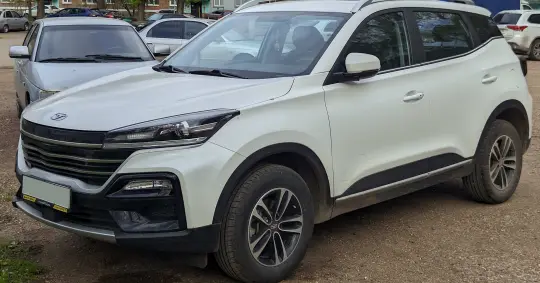
Kaiyi history
Origin
Kaiyi's roots lie in Chery's attempt to build a separate, youth-oriented value brand. In January 2014 Chery set up Cowin Auto (Kaiyi in Chinese) as a wholly owned subsidiary. Early Cowin cars were close relatives of Chery models: the Cowin C3 and X3 shared platforms with Chery's compact sedans and the Tiggo 3. In December 2017 the company changed hands. The municipal government of Yibin in Sichuan, a city better known for its liquor industry, took a majority stake as part of a plan to build up a local car industry, and the company moved its registration and main production to Yibin under the name Yibin Kaiyi Automobile.
Ownership
Today Kaiyi is controlled by Yibin's state-owned investment companies, with Chery and other partners remaining as shareholders. The relationship with Chery is still important: Kaiyi models use Chery engines, transmissions and platforms, which keeps development costs low and gives the brand proven components. Kaiyi also builds vehicles for Chery under contract and shares models with Chery's QQ city-car family.
Key milestones
- 2014: Cowin Auto is founded by Chery.
- 2016–2017: the Cowin X3 and X5 SUVs widen the range.
- 2017: Yibin's government becomes the majority owner and the company moves to Sichuan.
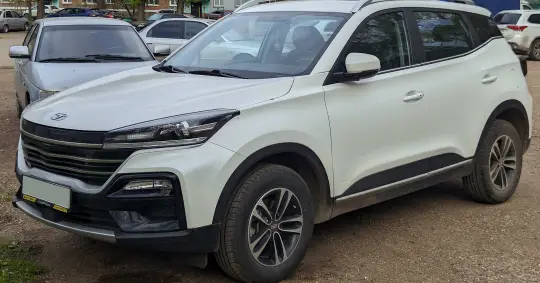
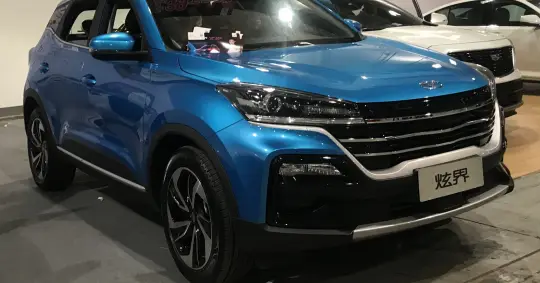
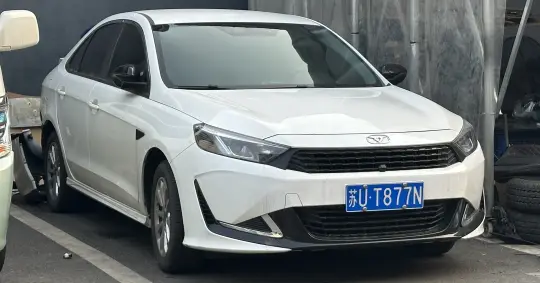
- 2020: the Xuandu sedan (exported as the E5) and the Showjet small SUV are launched.
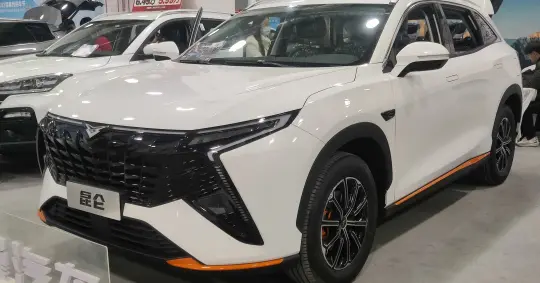
- 2022: the brand is renamed Kaiyi and adopts a new design language; the Kunlun mid-size SUV goes on sale at the end of the year.
- 2023: the Shiyue electric city car, the first model on Kaiyi's i-EA electric platform, is launched; local assembly of the E5 starts in Kaliningrad, Russia.
- 2024: the Kunlun iHD plug-in hybrid joins the range, followed by the larger Kunlun L8; the Shiyue Mate five-door goes on sale.
Products
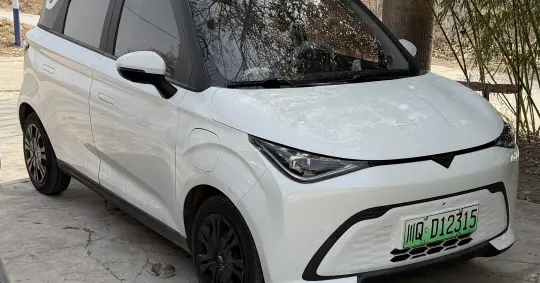
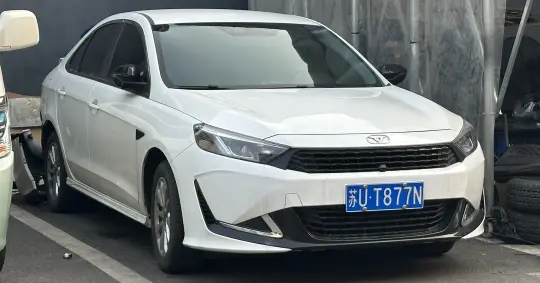
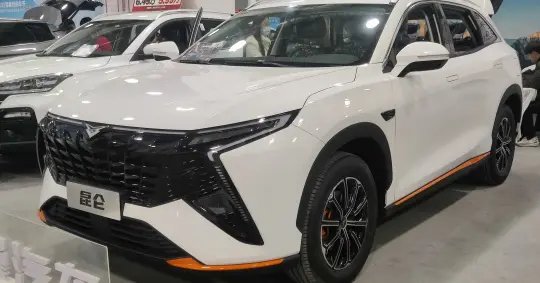
Kaiyi sells practical, affordable cars. The Kunlun is a mid-size SUV with a turbocharged petrol engine; the Kunlun iHD adds Chery's plug-in hybrid system, and the Kunlun L8 is a larger plug-in hybrid SUV. The Xuandu is a compact sedan, also offered as the Xuandu EV. The Showjet, Showjet Pro and Showjet Pro EV are small SUVs aimed at first-time buyers. The Shiyue is a three-door electric city car; a five-door version, the Shiyue Mate (later renamed Shiyue Max), is also sold by Chery as the QQ Duomi. Kaiyi also offers the Jiangtun electric microvans for logistics, which are outside the scope of this catalog.
Exports
Kaiyi began exporting in 2022 and now sells cars in more than 30 markets in South-East Asia, the Middle East, Africa, Latin America and Russia. Export names are simpler than the Chinese ones: the Showjet becomes the X3, the Showjet Pro the X3 Pro, the Kunlun the X7 and the Xuandu the E5. In 2024 Kaiyi presented international versions of the Kunlun iHD (X7 iHD), the Showjet Pro EV (X3 Pro EV) and the Shiyue (e-Qute 02), including right-hand-drive versions for markets such as Thailand, Malaysia and Nepal.
Kaiyi today
Kaiyi is a small but steady player in China's budget segment and one of the few car brands based in Sichuan. Its strategy is to combine Chery's mature technology with low prices at home and a growing export business, especially for right-hand-drive and emerging markets.
Engineering and partners
Kaiyi's cars use engines, platforms and many components from its shareholder Chery, which keeps development costs low and gives the brand access to proven 1.5-litre and 1.6-litre turbo engines and dual-clutch gearboxes. Its plug-in hybrid models use Chery-derived hybrid systems, while the electric versions share batteries and motors with Chery's new-energy products. Kaiyi also works with partners in assembly markets, and its exports often grow faster than its domestic sales.
Market position
In China, Kaiyi competes in the most price-sensitive part of the market, where it faces Chery itself, Geely, Changan and many new-energy brands. Its strength lies in export markets such as Russia, Central Asia, the Middle East, Latin America and South-East Asia, where buyers value well-equipped SUVs and sedans at low prices.
Current line-up in China
Key figures for the current model year, taken from manufacturer specification data (Autohome configuration sheets). Prices are Chinese retail prices (MSRP) converted at 1 USD = 6.7075 CNY (PBOC central parity, 27 November 2026).
- Kaiyi Kunlun – mid-size SUV; petrol; 4,738 mm long with a 2,820 mm wheelbase; up to 115 kW; 5–7 seats; priced at CN¥99,900–131,900 (about US$14,894–19,665).
- Kaiyi Kunlun iHD – mid-size SUV; plug-in hybrid; 4,736 mm long with a 2,820 mm wheelbase; up to 265 kW; electric-only CLTC range 201 km; 5–7 seats; priced at CN¥129,900–182,900 (about US$19,366–27,268).
- Kaiyi Kunlun L8 – mid-size SUV; plug-in hybrid; 4,736 mm long with a 2,820 mm wheelbase; up to 150 kW; 5 seats; priced at CN¥196,800–246,800 (about US$29,340–36,795).
- Kaiyi Xuandu – compact sedan; petrol; 4,666 mm long with a 2,700 mm wheelbase; up to 115 kW; 5 seats; priced at CN¥79,800–93,900 (about US$11,897–13,999).
- Kaiyi Xuandu EV – compact sedan; battery electric; 4,724 mm long with a 2,700 mm wheelbase; up to 100 kW; CLTC range 451 km; 5 seats; priced at CN¥169,900 (about US$25,330).
- Kaiyi Showjet – small SUV; petrol; 4,400 mm long with a 2,632 mm wheelbase; up to 85 kW; 5 seats; priced at CN¥63,900–79,900 (about US$9,527–11,912).
- Kaiyi Showjet Pro – small SUV; petrol; 4,420–4,450 mm long with a 2,632 mm wheelbase; up to 115 kW; 5 seats; priced at CN¥64,900–94,900 (about US$9,676–14,148).
- Kaiyi Showjet Pro EV – small SUV; battery electric; 4,400 mm long with a 2,632 mm wheelbase; up to 120 kW; CLTC range 401 km; 5 seats; priced at CN¥156,600–176,600 (about US$23,347–26,329).
- Kaiyi Shiyue – mini hatchback; battery electric; 3,720–3,725 mm long with a 2,520 mm wheelbase; up to 55 kW; CLTC range 201–405 km; 4–5 seats; priced at CN¥47,900–69,900 (about US$7,141–10,421).
Official website: kaiyiauto.com